A Reflection on the Certification Journey
By Suzanne Moss
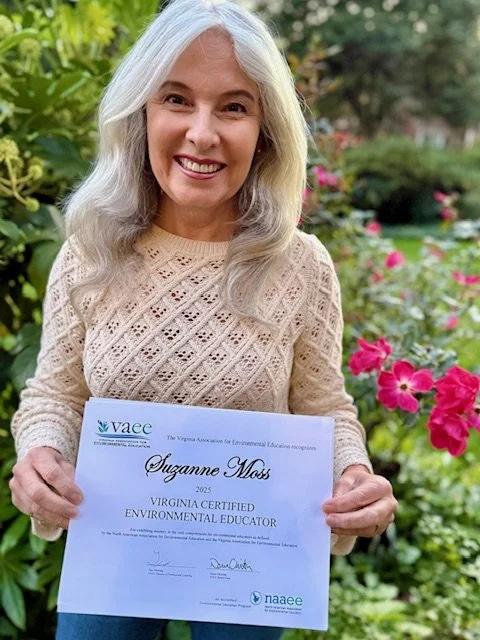
Suzanne Moss, Owner and Operator of The Nature Bus; President and Founder of Nature Matters, based in Virginia Beach; and retired classroom educator is our newest Virginia Certified Environmental Educator!
If you follow our blog, you know that we typically share about our newest certified educators via an interview-style post. However, as Suzanne was completing her final submissions in the Certification Program, she penned a reflection that speaks so well to what we hope for our certification candidates, that we did not want to alter it one bit.
With Suzanne’s permission, we bring you her Reflection in her own words…
When I first registered for this certification, I had no idea what journey I was stepping into. It was almost an impulsive decision — I heard about it at the annual conference, came home inspired, and signed up. What had I taken on? I didn’t truly know. How long would it take? What would be required? Even with the syllabus in hand, I couldn’t have anticipated the depth of learning, self-reflection, and personal growth that lay ahead.
This certification process was intense. In fact, it was more demanding than both my bachelor’s and master’s degrees in elementary education — by far. There were moments when I felt completely overwhelmed, ready to “jump ship.” But each time, Tara Poelzing, Director of Professional Learning at VAEE, was there with calm reassurance. She helped me see the bigger picture and encouraged me. I took a deep breath and understood that I needed to take things one step at a time: one hoop, then the next, and the next... until I finally reached the finish line. Tara’s clarity and kindness carried me through. I am so appreciative.
Today, standing at that finish line, I feel deeply proud — and profoundly grateful. Earning the VAEE Environmental Educator’s Certification, under the umbrella of the North American Association for Environmental Education (NAAEE), is an honor I hold with pride. This nationally recognized credential represents the highest standards in environmental education, aligned with an organization that has shaped excellence in EE around the world.
When I began this program, I couldn’t have articulated realistic goals, nor could I have
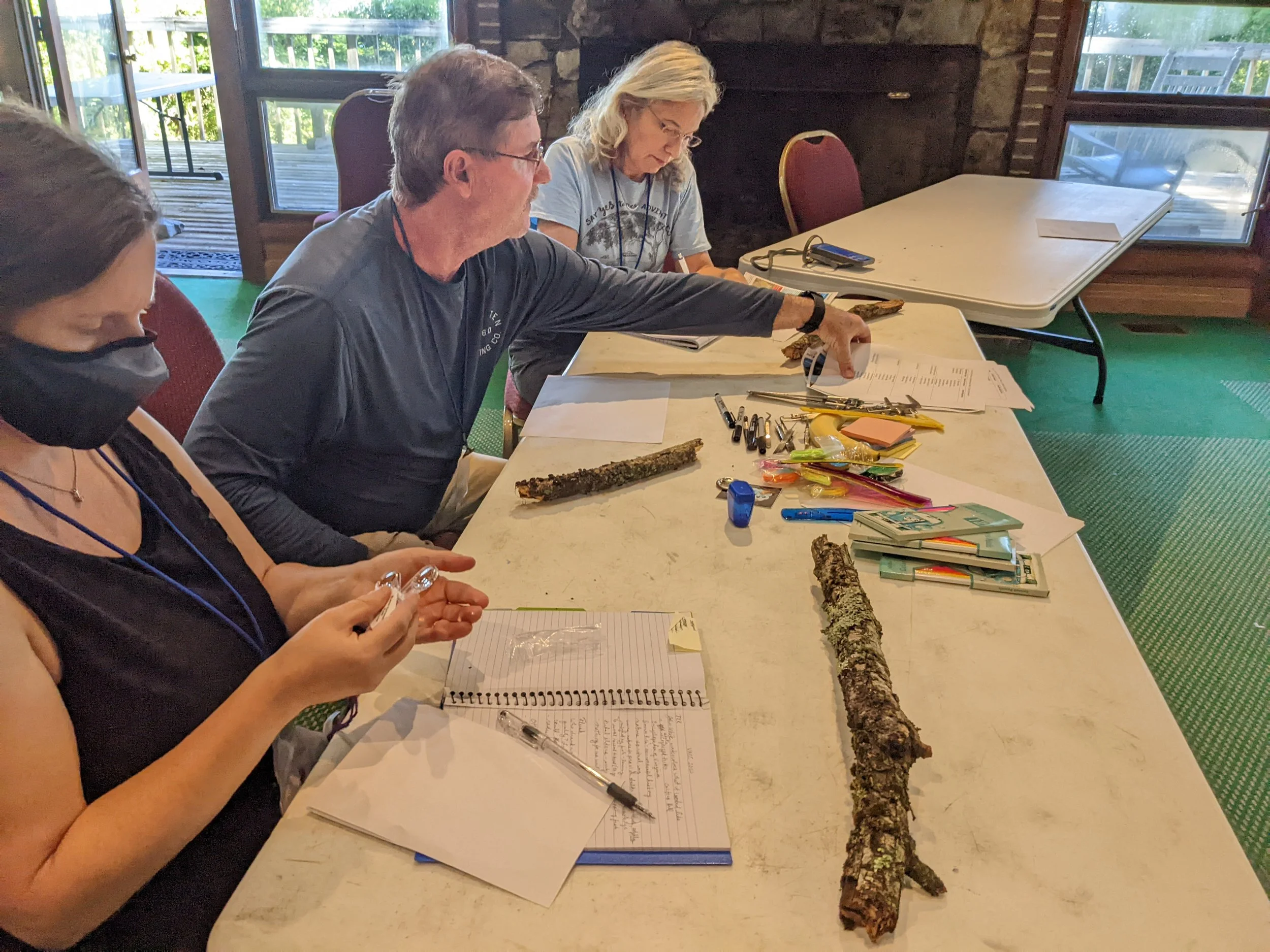
designed a meaningful professional development plan. Thankfully, the NAAEE and VAEE teams had already done that work for me. The “Guidelines for Excellence – Professional Development for Environmental Educators” published by NAAEE (ISBN #1-884008-78-X © 2019) and the step by step assignments in the VAEE program, exposed me to important learnings in the following categories: A Vision for the Future; Essential Underpinnings of EE; and the Instructional Vision of EE. The program guidelines are broken down into six (6) themes: 1. Environmental Literacy; 2. Foundations of EE; 3. Professional Responsibilities of the Environmental Educator; 4. Planning and Implementing EE; 5. Fostering Learning and Promoting Inclusivity; 6. Assessment and Evaluation. These guidelines became my compass, helping me grow in ways I didn’t even know I needed. I was guided step-by-step toward becoming a well-rounded environmental educator.
Reflecting on My Initial Goals
When I completed the self-assessment at the start of the program, my goal was simple: to become environmentally literate enough to guide some of the tours for The Nature Bus, my
eco-tour company. I planned to strengthen my weaknesses through the workshops and networking opportunities offered. But honestly, I didn’t yet understand the scope of what “environmental literacy” really meant. I remember marking myself “proficient” across the board — after all, I have been a Master Naturalist volunteer for a decade. I thought I was relatively proficient. It didn’t take long to realize how wrong I was. In hindsight, I should have rated myself “lacking” in Environmental Literacy and Foundations of EE, “basic” in Professional Responsibilities, and “proficient” in Planning, Fostering Learning, and Assessment. My greatest weakness was — and still is — environmental literacy. I often wish I could turn back time 40 years and major in environmental science, ecology, botany, or ornithology. I would have loved to spend my entire career as an environmental educator.
Even during my two decades as a fourth-grade teacher, I was always sneaking my students outside — teaching reading or math in the courtyard so we could observe nature as we learned. The impulse to teach through the natural world was always there; I just didn’t have the vocabulary or framework to recognize it as environmental education.
“My goals shifted from ‘know everything’ to ‘stay curious, keep learning, and share what I learn with others.’”
Reaching and Revising My Goals
I didn’t reach the goal I originally imagined — to become environmentally literate in every corner of the natural world. Along the way, however, I discovered new and more meaningful goals. Through my nature journal, the environmental literacy courses, and countless hours of exploration, I’ve grown tremendously. I’ve learned to accept that no one can master all of nature’s knowledge. My goals shifted from “know everything” to “stay curious, keep learning, and share what I learn with others.”
Applying My Learning
The lessons from this program have reshaped every aspect of my professional and personal life.
First, as a grandmother, I now see myself as my grandchildren’s “guide to wonder.” Three- year-old Aliza already loves worms, bugs, and snakes — and I couldn’t be happier! Each nature walk, each discovery, is a chance to nurture her curiosity and awe.
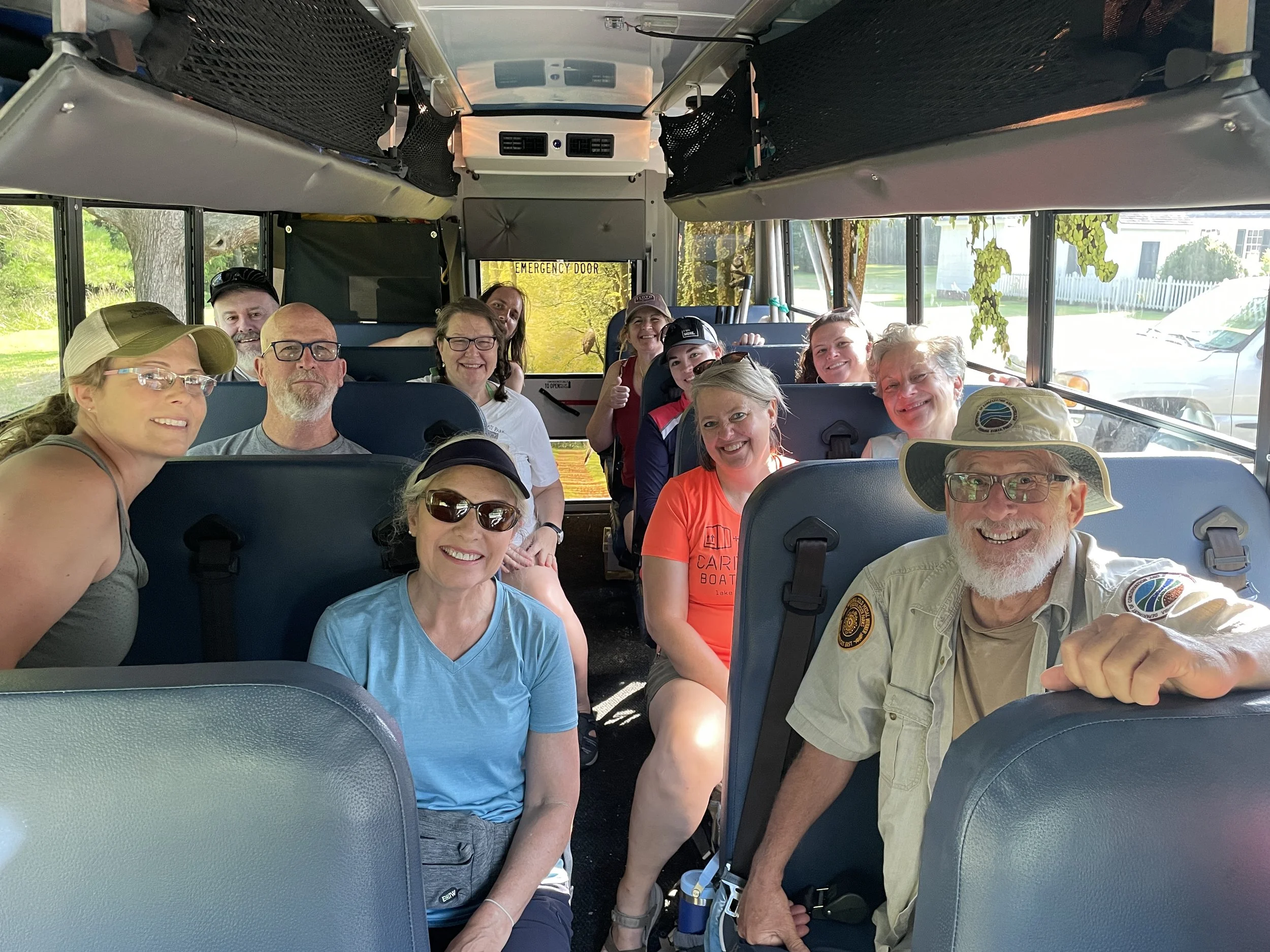
Second, as owner of The Nature Bus, I’ve gained the humility to recognize that I don’t have to be the guide on the tours. My role is to design and support experiences led by true subject-matter experts — naturalists, ecologists, and interpreters — while continuing to learn alongside them. That realization brought me immense peace.
Finally, and most unexpectedly, this certification reignited my nonprofit, Nature Matters, a 501(c)(3) organization I founded in 2019. COVID-19 had derailed it, and I had nearly given up. But my VAEE Capstone Project gave it new life. I rebuilt the board, recruited passionate community members, and together we created something magical: a free Nature Party at First Landing State Park. Over 130 children and their families attended a joyful afternoon filled with yoga, mud kitchens, forest music, birdhouse building, watercolor painting, nature walks, and — the highlight — tagging and releasing monarch butterflies. It was a true celebration of connection, learning, and love for the Earth.
Looking Ahead
Today, I am a white-haired grandmother with a national certification — and a heart full of gratitude. My goals have changed, beautifully. When I began, I didn’t have grandchildren. Now, I see my greatest purpose: to share the natural world with them. Rachel Carson, in A Sense of Wonder, wrote that every child needs just one adult to share the beauty of nature — to awaken awe and curiosity that lasts a lifetime. That is my new calling. If my love for nature can inspire even one child to grow into the next great naturalist— the next Jane Goodall — then my VAEE certification will have fulfilled its highest purpose.
Signing off...
I’m heading outside to look for bugs with 3-year-old Aliza!